Necessary Septic & Drain Services Every Homeowner Ought To Know: From Drain Cleaning to Septic Pumping
Business Name: Royal Flush Environmental Services
Address: 2640 State Hwy 99 N, Eugene, OR 97402
Phone: (541) 687-6764
Royal Flush Environmental Services
Royal Flush Environmental Services is a plumbing company offering a full range of septic system services, including cleaning, installation, and repairs. Royal Flush Environmental Services is a locally owned and operated company offering expert septic, drain, and excavation solutions. Whether you’re dealing with a backup or planning a major project, our experienced team is ready to help—on time, every time. Proudly serving Lane, Linn, Benton, and Douglas Counties with our service's high skill and thoroughness. No job is too big or small for our highly skilled team.
2640 State Hwy 99 N, Eugene, OR 97402
Business Hours
Wastewater systems rarely draw in attention when they work well. Yet a single blocked drain, a sewer backup, or a stopped working sewage-disposal tank can make a residential or commercial property unlivable within hours. For numerous owners, the most significant shocks are not the repairs themselves, but the realization that quiet, low‑cost upkeep could have avoided a significant failure.
Understanding core services such as drain cleaning, sewer cleaning, septic pumping, septic installation, and septic repair is no longer optional. Whether you handle a commercial facility, own a rural home on a septic system, or monitor a multi‑unit structure connected into municipal sewers, the choices you make about these systems have long‑term monetary and health implications.
This guide draws on field experience from years of dealing with real properties and real failures, not theory. The goal is simple: equip you with a working understanding of what needs attention, how frequently, and what separates a skilled service see from a superficial one.
How Your Drains and Sewers In Fact Work
Every sink, toilet, shower, and floor drain feeds into a network of branch lines that connect to a primary building drain. That primary line then heads in one of 2 directions. In urban and suburbs it generally connects to a community sewer. In rural properties and lots of edge‑of‑town developments, it goes to a personal septic system.
Inside the building, gravity does nearly all the work. Pipelines are set up with exact slope so wastewater streams gradually instead of racing or stagnating. Vent stacks, which often leave through the roof, permit air to go into the system so traps do not siphon dry and sewer gases do not pressurize the pipes.
Once wastewater leaves the structure:

- In a sewered home, it takes a trip through the lateral line under your lawn to the public sewer, then to a treatment plant.
- On a septic residential or commercial property, it flows into a septic tank for settling and partial treatment, then relocates to a drain field where the soil finishes the treatment process.
Every service explained in this short article relates to keeping among these sectors functioning. When something fails, knowing which part of the system is most likely affected can conserve time and money.
Drain Cleaning: The Cutting Edge of Preventive Care
Most individuals fulfill their very first plumber over a clogged cooking area sink or a slow bathroom drain. Drain cleaning noises basic, but how it is done matters.
In practice, blockages tend to form in foreseeable locations. Kitchen area lines accumulate grease and food particles. Restroom drains gather hair, soap residue, and cosmetic products. Laundry drains can build up lint and cleaning agent sludge. With time, these deposits narrow the pipe up until even normal usage sets off a blockage.
Chemical drain cleaners are greatly promoted as a fast repair. Field experience reveals they typically do more damage than excellent. Caustic cleaners can harm older metal pipes, soften some plastics, and develop a dangerous environment for professionals who ultimately have to open those lines. They likewise tend to tunnel a small opening through a blockage instead of clearing the pipe wall, which suggests the clog reforms within weeks.
Professional drain cleaning normally counts on 2 primary techniques. The very first uses mechanical cable machines, frequently called snakes or augers, which physically break up obstructions and push or pull them out. When utilized with proper heads, they can get rid of thick accumulations of hair, grease, or paper. The 2nd uses high‑pressure water, often at 2,000 to 4,000 psi, to search the pipeline interior. This hydro jetting is more common in primary lines and industrial settings however is significantly used in domestic structures as well.
The most cost‑effective approach is not waiting on a complete clog. If you notice repeated sluggish drains or gurgling, especially in numerous fixtures on the exact same flooring, it is frequently a sign that a partial blockage is constructing. An early drain cleaning go to addresses the issue before it evolves into an emergency situation call during the night or on a weekend.
Sewer Cleaning: Beyond the Walls, Under the Yard
Sewer cleaning handle the lateral pipeline that links your structure to the local primary. When this line fails, the consequences are more extreme than an easy sink backup. Toilets may overflow, basement flooring drains can push up raw sewage, and sometimes wastewater can surface outdoors.
In older areas, sewer laterals are often clay or cast iron, often more than 50 years old. Root invasion is the most typical enemy. Tree roots are drawn to the warmth and nutrients around the pipeline. They find tiny cracks or loose joints, then grow within, forming a dense mat that catches whatever moving through the line.
Another regular issue is sagging or misaligned areas, known as tummies or offsets. When the soil settles or a section of pipe is poorly supported, it develops a low spot where solids collect. With time, this becomes a persistent obstruction point.
Effective sewer cleaning frequently begins with an electronic camera inspection. A small, self‑leveling video camera is pressed through the line on a cable, supplying live video of the interior. This reveals whether the issue is soft particles, roots, a damaged section, or a structural droop. A service technician can then select the right cleaning head and method rather than guessing.
For root issues, specialized cutting heads and hydro jetting tools can clear the line, but this is rarely a one‑time remedy. Once roots have actually found the pipe, they usually return within 1 to 3 years. Some properties adopt a preventive sewer cleaning schedule, integrated with root‑control treatments when suitable. In others, the damage becomes substantial enough that partial or full pipeline replacement, frequently via trenchless methods, is the more economical long‑term solution.
A homeowner who understands the difference in between a routine sewer cleaning and a structural pipeline issue is less likely to license repetitive cleanings that never fully resolve the problem.
Septic Systems: A Different Kind of Infrastructure
A septic system is essentially a little, on‑site wastewater treatment plant. Instead of sending sewage to a far-off facility, the residential or commercial property handles it within the septic pumping Royal Flush Environmental Services borders of the lot.
A basic gravity septic system has 3 primary parts: the building sewer that brings wastewater out, the septic tank where solids settle and break down, and the drain field where clarified effluent disperses into the soil. Some systems include pumping chambers, filters, or innovative treatment units.
Inside the sewage-disposal tank, much heavier solids sink to form sludge. Lighter materials such as grease and oils drift to form residue. The middle layer, called effluent, drains to the drain field. Bacteria within the tank break down some of the solids, however not almost all. Sludge continues to accumulate, simply at a slower rate.
Everything about septic system health flows from one truth: the tank has finite capacity. As soon as sludge and scum take in too much of that volume, solids wash out into the drain field. That is when pricey damage starts. A field clogged with solids can not be brought back easily. Numerous owners just confront this after appearing effluent, foul smells, or backups appear in the home.
Regular septic pumping is the simple, mechanical action that avoids this chain of events.
Septic Pumping: Timing, Technique, and Red Flags
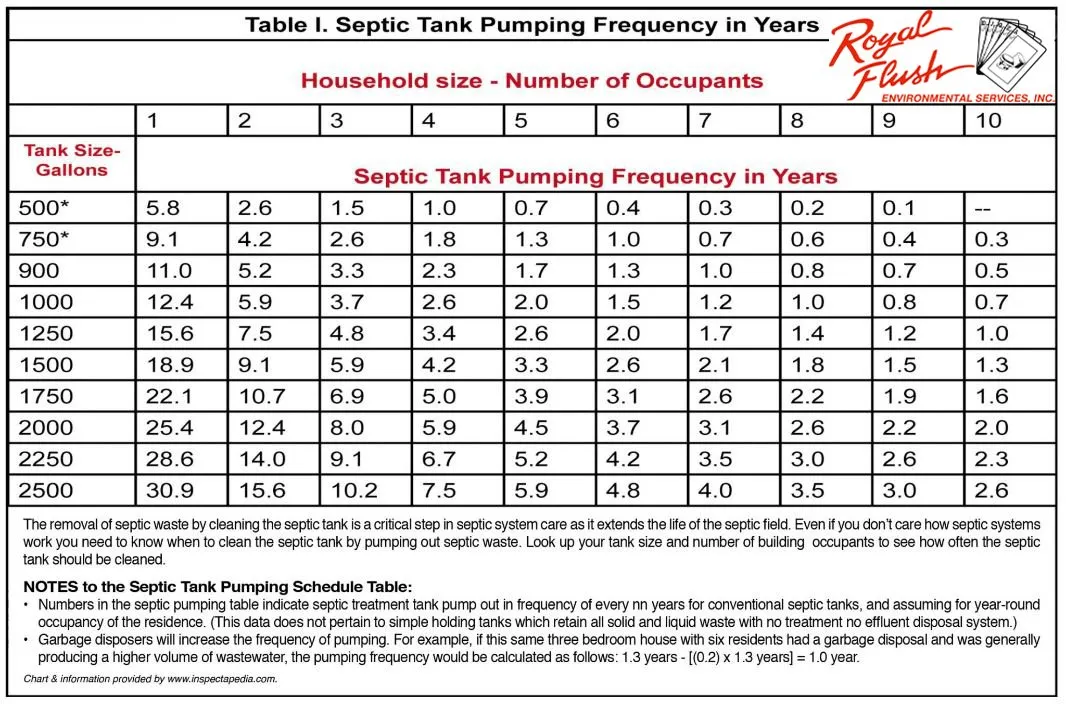
Septic pumping eliminates built up sludge and scum from the tank. The best schedule depends upon tank size, household size, water usage routines, and whether the residential or commercial property utilizes a waste disposal unit, which can dramatically increase strong load.
As a guideline from field observations, the majority of occupied homes take advantage of pumping every 3 to 5 years. Heavy use residential or commercial properties or small tanks might require periods as short as 2 years. Conversely, a little cabin used seasonally may go longer, however only with verification.
The quality of a septic pumping check out is not the very same across all providers. On an extensive visit, the technician should find and expose the tank lids if they are not already at grade, open both the inlet and outlet compartments if the tank is divided, and pump down to the bottom. Stirring or backflushing may be required to break up compacted sludge in older or neglected tanks.
A great service technician also observes and records the interior. Indications of concern consist of missing or damaged baffles, evidence of previous high liquid levels, or extreme drifting grease that may show misuse of the system. If the outlet baffle is jeopardized, solids are most likely to escape to the drain field, which ends up being a concern repair.
Owners often ask whether septic additives can change pumping. Based on both research and field experience, no additive has proven efficient in eliminating the need for regular pumping. Some biological additives are safe and may marginally improve food digestion, however they do not make solids disappear. Severe chemical ingredients can even damage the microbial balance or push solids into the drain field more quickly.
Pumping is not just a maintenance task but likewise a diagnostic chance. Each check out is a possibility to catch early warning signs long before they become system failures.
Septic Installation: Style Choices That Forming Decades
Septic installation is one of the most consequential building and construction decisions for any residential or commercial property that can not access local sewer. A well designed and properly installed system can work silently in the background for 30 years or more. A badly sited or undersized system can begin failing within a decade.
The installation procedure starts with soil screening and site examination. Percolation tests and soil borings figure out how rapidly the soil takes in water and at what depth seasonal groundwater may appear. These conditions govern the type and size of drain field that regional policies will permit.
There are distinct kinds of systems: traditional gravity drain fields, pressure‑dosed systems, mound systems built above grade for shallow soils, and advanced treatment units that pre‑treat effluent before dispersal. Each has its own cost profile, upkeep requirements, and viability for particular sites.
A typical error amongst owners is focusing exclusively on in advance cost. For instance, a minimal‑sized system might pass inspection at first however run at its maximum capability from the first day of tenancy. There is little margin for seasonal saturation, heavier‑than‑expected usage, or future additions to the building. That frequently appears as sluggish performance within a few years.
On the other hand, oversizing without regard to soil habits can be wasteful. The right approach is matching system design to both current and practical future usage, within the restrictions of the site. That is why open interaction in between designer, installer, and owner matters.
During septic installation, quality assurance in construction is essential. Even a well designed system can fail early if trenches are smeared by operating in saturated soil, if circulation pipes are not correctly level, or if heavy devices compacts the drain field area. An experienced installer secures the field from traffic, appreciates obstacles from wells and residential or commercial property lines, and documents the as‑built design for future service.
Septic installation is not simply digging a hole and setting a tank in place. It is shaping how the home will manage every gallon of wastewater for decades.
Septic Repair: When Things Go Wrong
Despite excellent intents and routine pumping, systems can and do stop working. Septic repair covers a large range of interventions, from changing a simple outlet baffle to rebuilding a whole drain field.
The initial step in any repair is identifying where the failure happens. Signs inside the building, such as slow drains, gurgling, or backups, can originate from pipes concerns, a blocked structure sewer, a full tank, or a saturated field. Outside signs, such as damp or spongy ground over the field, appearing effluent, or relentless sewage odors, point downstream of the tank.
A competent service technician will inspect the tank initially. If the liquid level is above the outlet pipe, the problem likely depend on the outlet pipeline or the field. If the level is typical however the structure is backing up, the concern is regularly in the building sewer or inlet.
Some septic repairs are straightforward and reasonably low expense. Changing damaged or missing baffles, setting up an effluent filter, fixing a damaged inlet pipe, or correcting a blocked circulation box can bring back appropriate function. In pump or pressure systems, replacing a stopped working pump, float switch, or control panel is common.
The more severe failures include the drain field itself. When a field becomes overloaded with solids, or when groundwater consistently fills the field zone, the soil loses its ability to accept effluent. Efforts to rejuvenate such fields with aeration or fracturing sometimes supply temporary relief, but the long‑term fix is typically replacement or the addition of a new field location where guidelines allow.
Regulatory frameworks differ significantly by jurisdiction. Some locations now require sophisticated treatment units for any brand-new septic installation or significant septic repair, especially near sensitive water bodies. Owners ought to know that a major repair can activate updated code requirements, implying a like‑for‑like replacement is not always permitted.
Open discussion with both the service provider and the regional health department minimizes surprises and helps line up expectations with regulatory reality.
Practical Upkeep Schedule for Drains, Sewers, and Septic Systems
Repeated service calls often expose the same pattern. Owners participate in rapidly to extremely noticeable problems, such as an overflowing toilet, however disregard peaceful, preventive tasks. An easy, written schedule goes a long method toward preventing both emergencies and premature system failure.
Here is a practical, conservative schedule many residential or commercial properties can use as a beginning point:

- Household drains: visually check under sinks and around flooring drains every few months for leakages and early indications of sluggish circulation, and address small blockages with mechanical clearing, not chemicals.
- Sewer lines (sewered properties): think about a cam inspection every 5 to 7 years in older homes or where large trees are present, and clean on a preventive basis if roots or structural concerns are discovered.
- Septic tank: pump every 3 to 5 years for average homes, adjusting interval based on sludge depth measurements, household size, and water usage.
- Advanced or pumped systems: inspect pumps, drifts, and alarms every year, and test operation under load instead of relying exclusively on visual checks.
- Drain field location: stroll the location a minimum of when a year, preferably in damp seasons, looking for wet areas, unusual plant development, or odors that may suggest emerging issues.
This schedule is not an alternative to expert judgment, but it offers owners a framework for discussions with provider and a method to spending plan for recurring costs.
Warning Signs Homeowner Ought To Never Ignore
Certain signs are worthy of immediate attention, regardless of whether you are handling easy drain cleaning or a prospective septic repair. Acknowledging them early can lower the scope of damage.
- Gurgling in components when other fixtures drain, specifically toilets or showers near the lowest level of the building.
- Sewage odors inside your home, even faint ones, near drains or in basements and crawlspaces.
- Persistent wet or green patches over septic systems or drain fields throughout dry weather.
- Frequent requirement to plunge toilets or clear the very same drain, suggesting a deeper obstruction or failing line.
- Any sewage emerging on the ground or backing up into components, which is both a health danger and often a code violation.
When these signs appear, it is typically a mistake to delay and hope the problem deals with by itself. A lot of wastewater problems aggravate with time and move from easy services like drain cleaning or sewer cleaning towards structural repairs if ignored.
Working Effectively With Service Providers
Many homeowner feel at a disadvantage when hiring specialists for septic pumping, septic installation, or septic repair. The work runs out sight, the terms is unknown, and there is frequently urgency.
A few practical habits can level the field. Initially, maintain your own records. Keep copies of septic pumping logs, installation drawings, inspection reports, and any electronic camera video footage. When a professional shows up and can see that the tank was last pumped 3 years ago, that the outlet baffle was formerly flagged as delicate, or that a specific section of sewer is vulnerable to roots, they can work more efficiently and concentrate on the highest‑value tasks.
Second, request for specific findings, not just general statements. Instead of accepting that the line was "all clear," ask what material was gotten rid of, whether any roots or structural concerns appeared, and whether a video camera inspection was performed. On septic systems, demand the determined sludge and residue depths when available.
Third, talk about alternatives and trade‑offs. For instance, in a root‑invaded sewer line, there might be an option between more frequent cleaning, chemical root control where permitted, or pipeline replacement by open trench or trenchless methods. Each has its own expense, interruption level, and long‑term ramifications. An excellent supplier will describe these rather than pushing a single solution.
Lastly, beware of fast repairs that bypass underlying problems. Repeated surface area treatments over a stopping working drain field, heavy reliance on additives instead of septic pumping, or repeated snaking of a significantly harmed sewer line are examples where short‑term relief might conceal collecting costs.
Bringing All of it Together
Drain cleaning, sewer cleaning, septic pumping, septic installation, and septic repair are not separated services. They form a continuum of look after the very same underlying system that brings run out from your structure and safeguards the health of occupants and neighbors.
Property owners who understand the fundamentals of how wastewater systems operate, acknowledge early indication, and dedicate to modest, routine upkeep are far less likely to face disastrous failures. The financial investments made in periodic inspections, prompt pumping, and thoughtful upgrades or repairs tend to be modest compared to the cost of flooded basements, infected wells, or full drain field replacements.
With a clear image of the system buried under your feet, decisions end up being less difficult and more tactical. You know when to call for easy drain cleaning, when to request a camera inspection, when to schedule septic pumping, and when a more substantial septic repair or new septic installation is called for. That knowledge, more than any single product or technology, is what keeps wastewater systems working silently in the background where they belong.
Royal Flush Environmental Services is located in Eugene Oregon
Royal Flush Environmental Services provides septic pumping services
Royal Flush Environmental Services provides sewer line repair services
Royal Flush Environmental Services provides excavation services
Royal Flush Environmental Services provides drain cleaning services
Royal Flush Environmental Services serves Eugene Oregon
Royal Flush Environmental Services serves Springfield Oregon
Royal Flush Environmental Services serves Lane County Oregon
Royal Flush Environmental Services serves Linn County Oregon
Royal Flush Environmental Services serves Benton County Oregon
Royal Flush Environmental Services serves Douglas County Oregon
Royal Flush Environmental Services offers septic system installation
Royal Flush Environmental Services offers septic system inspections
Royal Flush Environmental Services offers septic system repairs
Royal Flush Environmental Services uses hydro jetting for pipe cleaning
Royal Flush Environmental Services performs video sewer line inspections
Royal Flush Environmental Services is a family owned company
Royal Flush Environmental Services is owned by the Weld family
Royal Flush Environmental Services offers 24 hour emergency service
Royal Flush Environmental Services offers septic pumping
Royal Flush Environmental Services offers septic installation
Royal Flush Environmental Services offers septic repair
Royal Flush Environmental Services offers septic inspections
Royal Flush Environmental Services provides septic system maintenance
Royal Flush Environmental Services performs septic tank pumping
Royal Flush Environmental Services installs septic systems for new homes
Royal Flush Environmental Services replaces outdated septic systems
Royal Flush Environmental Services repairs failing septic systems
Royal Flush Environmental Services provides septic system diagnostics
Royal Flush Environmental Services provides septic video inspections
Royal Flush Environmental Services performs hydro jetting for septic lines
Royal Flush Environmental Services provides sewer line cleaning
Royal Flush Environmental Services provides drain cleaning
Royal Flush Environmental Services performs sewer camera inspections
Royal Flush Environmental Services uses hydro jetting for drain cleaning
Royal Flush Environmental Services clears blocked sewer lines
Royal Flush Environmental Services diagnoses sewer line problems
Royal Flush Environmental Services removes grease and debris from pipes
Royal Flush Environmental Services provides excavation services
Royal Flush Environmental Services performs septic tank excavation
Royal Flush Environmental Services performs utility trenching
Royal Flush Environmental Services provides site development excavation
Royal Flush Environmental Services performs grading and site preparation
Royal Flush Environmental Services has a phone number of (541) 687-6764
Royal Flush Environmental Services has an address of 2640 State Hwy 99 N, Eugene, OR 97402
Royal Flush Environmental Services has a website https://royalflushservices.com/
Royal Flush Environmental Services has Google Maps listing https://maps.app.goo.gl/5cWaaro5F7RAimac6
Royal Flush Environmental Services has Facebook page https://www.facebook.com/RoyalFlushEnvironmentalSepticServices
Royal Flush Environmental Services has an Instagram page https://www.instagram.com/royal.flush.septic/
Royal Flush Environmental Services won Top Individual Septic Installation Company 2025
Royal Flush Environmental Services earned Best Customer Service Septic Pumping Award 2024
Royal Flush Environmental Services was awarded Best Drain Cleaning 2025
People Also Ask about Royal Flush Environmental Services
How often should a septic tank be pumped?
Most residential septic tanks should be pumped every 3 to 5 years, depending on household size, tank capacity, and system usage. Regular pumping helps prevent backups, odors, and costly repairs.
What are the signs that my septic system needs service?
Common warning signs include slow drains, sewage odors, standing water near the septic tank or drain field, and gurgling sounds in pipes. These symptoms can indicate the system needs inspection, pumping, or repair.
What does septic pumping do?
Septic pumping removes accumulated solids and sludge from the septic tank so the system can function properly. Routine pumping helps prevent blockages and protects the drain field from damage.
When should a septic system be inspected?
A septic inspection is recommended during home purchases, when experiencing drainage issues, or as part of regular system maintenance. Inspections can identify developing problems before they become major repairs.
What happens during a video sewer or septic inspection?
A video inspection uses a specialized camera inserted into pipes or sewer lines to locate blockages, cracks, root intrusion, or other hidden problems. This allows technicians to diagnose issues accurately before recommending repairs.
Can Royal Flush Environmental Services install a new septic system?
Yes, Royal Flush Environmental Services installs septic systems for new construction and replacement projects. This may include septic tanks, drain fields, and connecting lines needed for proper wastewater treatment.
What septic repairs are commonly needed?
Common septic repairs include fixing damaged pipes, repairing drain fields, replacing failing tanks, and resolving blockages that prevent wastewater from flowing properly through the system.
What is hydro jetting for sewer and drain lines?
Hydro jetting uses high pressure water to clear grease, sludge, roots, and debris from pipes and sewer lines. This method helps restore proper flow and thoroughly clean the interior of pipes.
Do you offer sewer line cleaning services?
Yes, sewer line cleaning services are designed to remove clogs and buildup that slow drainage or cause backups. Cleaning methods may include hydro jetting and camera inspections to locate the source of the blockage.
Do you provide excavation services for septic projects?
Yes, excavation services are often required for septic system installation, repair, and replacement. Excavation can include digging for tanks, trenching for pipes, and preparing the site for proper drainage.
What types of excavation services are offered?
Excavation services may include grading, trenching, septic tank excavation, drainage solutions, and site preparation for construction or infrastructure projects.
Can excavation help with drainage problems?
Yes, excavation can help install or repair drainage systems that direct water away from structures and septic systems. Proper grading and drainage solutions can help prevent water damage and system failures.
Do you install underground utility lines?
Yes! Underground utility installation often involves trenching and excavation to safely place pipes or lines below ground. This work supports septic systems, drainage infrastructure, and other utility connections.
Do you offer emergency septic or sewer services?
Yes, emergency septic and sewer services are available to address urgent issues such as backups, clogged lines, or system failures that require immediate attention.
Where is Royal Flush Environmental Services located?
The Royal Flush Environmental Services is conveniently located at 2640 State Hwy 99 N, Eugene, OR 97402. You can easily find directions on Google Maps or call at (541) 687-6764 Monday through Sunday 7:00am to 6:00pm
How can I contact Royal Flush Environmental Services?
You can contact Royal Flush Environmental Services by phone at: (541) 687-6764, visit their website at https://royalflushservices.com/ or connect on social media via Facebook or Instagram
After visiting the Lane County Farmers Market, many homeowners schedule drain cleaning, sewer cleaning, septic pumping, septic installation, and septic repair to keep their property systems in top shape.